Greece·for Americans
When to Go

Greek Public Holidays: What Closes on Orthodox Easter, August 15 and October 28

Which Greek public holidays close shops, banks and the Acropolis, and what Orthodox Easter, August 15 and October 28 actually change for a visitor.

Greece for Americans desk7 min readPublished November 13, 2026
Greek Public Holidays: What Closes on Orthodox Easter, August 15 and October 28
On this page
  1. 01Which days are public holidays in Greece
  2. 02What closes on a Greek public holiday
  3. 03What closes on Orthodox Easter in Greece
  4. 04What closes on August 15 in Greece
  5. 05What closes on October 28 in Greece
  6. 06The other Greek holidays: Clean Monday, March 25 and winter
  7. 07How to plan a trip around Greek holidays
  8. 08Greek public holidays: FAQ

Greek public holidays close less than most Americans fear, but each one closes something different. Orthodox Easter shuts the most and fills the ferries. August 15 empties Athens and packs the islands. October 28 brings parades and shut shops, while the ancient sites stay open. The pattern behind all of them is simple: banks, offices and most ordinary shops close, and the tourist economy keeps running.

Below is the list of holidays, then what each of the big three actually changes for a visitor, and what you can count on finding open whatever the date.

Which days are public holidays in Greece

Greece has fixed public holidays on January 1, January 6 (Epiphany), March 25 (Independence Day), May 1, August 15 (the Dormition of the Virgin), October 28 (Ochi Day), December 25 and December 26. A second group moves with Orthodox Easter: Clean Monday, Good Friday, Easter Sunday, Easter Monday and Whit Monday. Orthodox Easter follows the Julian calendar, so it often falls weeks after the Easter Americans celebrate.

The moving group is the one to check before you book. Orthodox Easter sometimes lands on the same Sunday as Western Easter and sometimes up to five weeks later, usually in April and occasionally in early May. Clean Monday falls seven weeks before it, at the start of Lent, and Whit Monday seven weeks after. Look up the Orthodox date for your travel year rather than assuming it matches the one on your calendar at home.

Whit Monday, called Agiou Pnevmatos, is the lightest of them. Banks and public offices close, but many private shops open, so most visitors never notice it. May 1 is the opposite case: it's a labor holiday with union marches, and in years when it collides with Easter week the government can move it.

What closes on a Greek public holiday

On a Greek public holiday, banks, post offices, government offices and most supermarkets close, along with the ordinary neighborhood shops that already shut on Sundays. Hotels, restaurants, cafes, taxis, ferries, flights and the Athens metro keep running, and in tourist areas such as Plaka and the island harbors, souvenir shops usually open too. Think of a holiday as a Greek Sunday, with a few added closures.
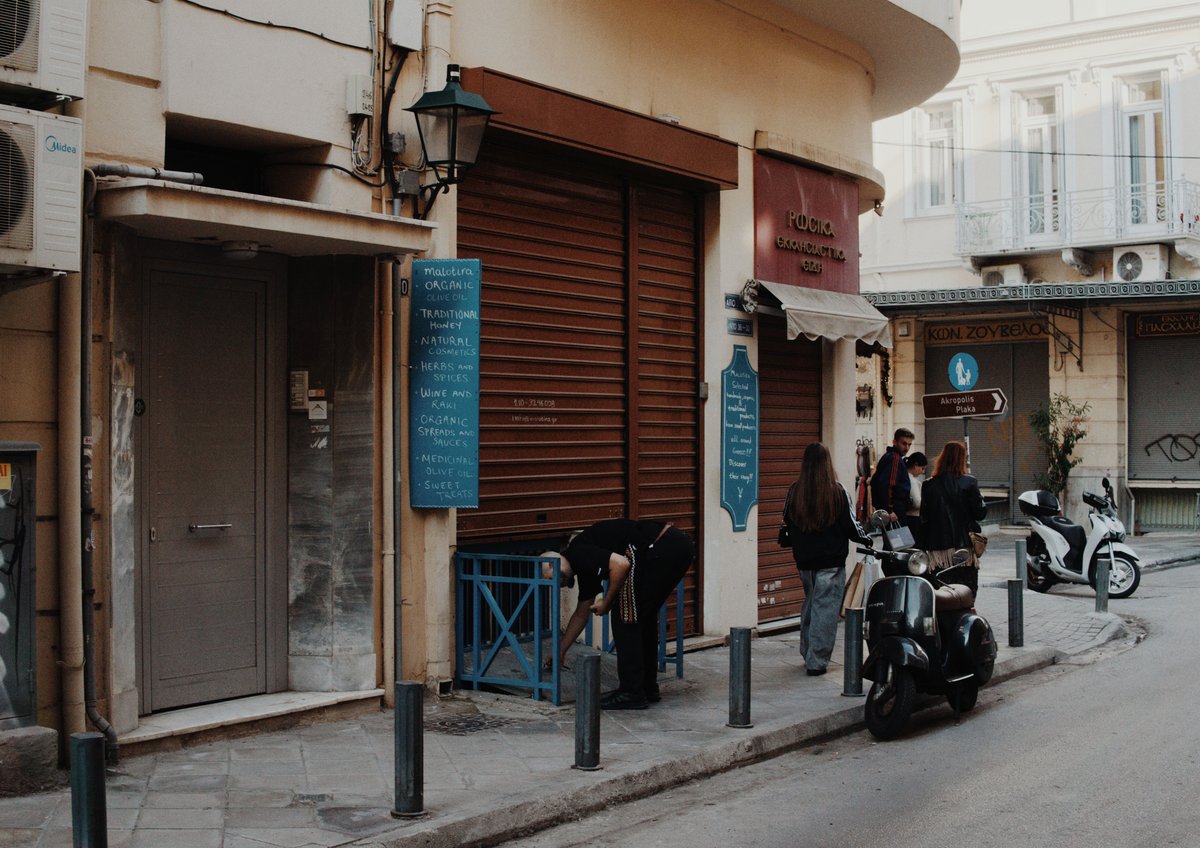
Shuttered shopfronts with their metal grilles pulled down along a quiet Greek street on a holiday

The archaeological sites

State archaeological sites and museums, including the Acropolis, close on only a handful of days: January 1, March 25, May 1, Easter Sunday, December 25 and December 26. On Good Friday and Holy Saturday they open on shortened hours. On every other holiday, including August 15 and October 28, they open as usual, which makes those days good ones for sightseeing while the shops are shut. Opening hours change by season, so check the Ministry of Culture's page for your dates before planning a day around one site. If you're in Athens on a first Sunday, our guide to the free first Sunday at the Acropolis covers what's included and how the lines run.

Cash, pharmacies and groceries

ATMs keep working on every holiday, so take out cash the day before rather than hunting for a bank. Pharmacies close, but each town keeps a rotating duty pharmacy open, and the closed ones post its address on the door. Supermarkets close on the main holidays, so on an island or in a rental apartment, shop the day before.

What closes on Orthodox Easter in Greece

Orthodox Easter is the biggest holiday in Greece, and it closes more than any other date. Shops shorten their hours on Good Friday and Holy Saturday, then close on Easter Sunday and Easter Monday, and many Athens tavernas shut while their owners go home to their villages. The state sites close on Easter Sunday only. Ferries and hotels run, but they fill with Greeks traveling for the long weekend.

Holy Week from the outside

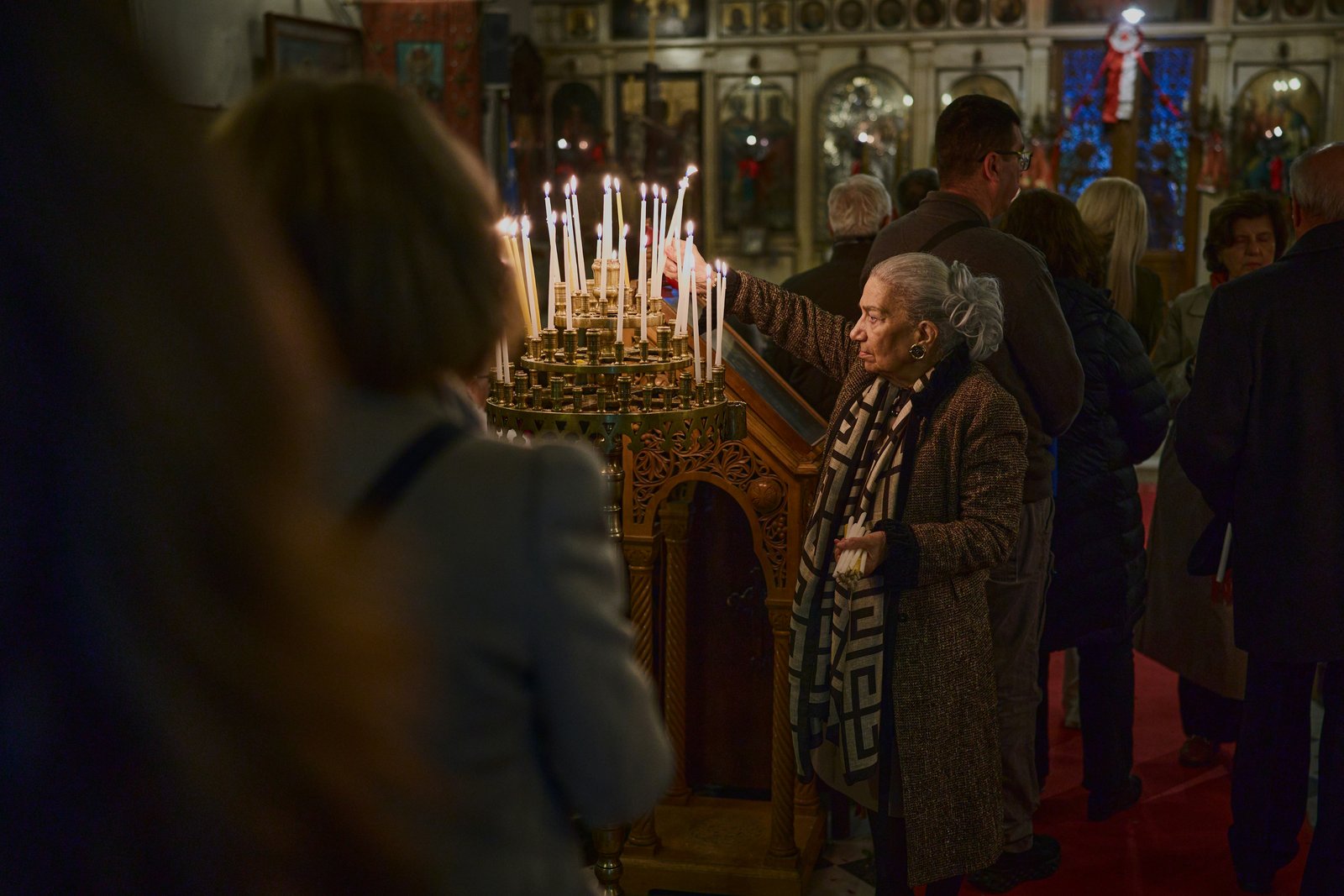
For a visitor, Easter is less a closure than an event worth planning a trip around. On Good Friday evening, every parish carries its flower-covered epitaphios, the symbolic bier of Christ, through the streets, and the processions are open to anyone who walks along quietly. Just before midnight on Holy Saturday, churches go dark, the priest brings out the new flame, and candles are lit hand to hand until the whole crowd outside is glowing. Fireworks follow. On Sunday the country roasts lamb on spits in courtyards and on village squares.

If you join the Saturday service, dress as you would for church at home and arrive early, because the crowd fills the square.

Ferries and rooms around Easter

Easter is the first big travel weekend of the Greek year. Athenians head to their family villages and the islands on Thursday and Friday and come back on Monday or Tuesday, so ferries out of Piraeus and Rafina sell out on those days, and island hotels that have just opened for the season fill with Greek families. Book ferries and rooms as soon as your dates are firm, and travel against the flow if you can. Wind can still cancel spring sailings, which our guide to cancelled ferries covers.

Athens goes quiet over the long weekend, which suits sightseeing if you stay where restaurants keep opening, such as Plaka or Koukaki.
→ Compare Athens hotels in Plaka and Koukaki

What closes on August 15 in Greece

August 15, the Dormition of the Virgin, closes banks, offices and ordinary shops across Greece, but the archaeological sites, beaches, tavernas and ferries all run. The holiday matters less for what it closes than for where Greeks go. Athens empties as families leave for the islands and their home villages, so the city is quiet and the islands are at the peak of their busiest week of the year.

On the islands, August 15 is a feast day with church services, processions and village festivals, the panigiria, that run late into the night with music and food. Tinos draws pilgrims from all over Greece, and Paros fills for the feast at its great church in Parikia. If you're on an island that week, ask your host where the local panigiri is; visitors are welcome.

The practical cost is transport and beds: ferries around August 15 are the hardest tickets of the summer. If your trip spans the date, fix your island legs early, or spend those days in a calm, half-empty Athens.

What closes on October 28 in Greece

October 28, Ochi Day, closes banks, offices and most shops across Greece, while the Acropolis and the other state sites stay open. The holiday marks the day in 1940 when Greece refused Mussolini's ultimatum to let Italian troops in, and it is celebrated with parades: schoolchildren march in every town, and Thessaloniki holds a large military parade. Expect street closures along the parade routes in the morning.

In Athens, the student parade passes near Syntagma, so the avenues around it close to traffic for the morning. For a visitor it's an easy day: see the Acropolis or the Ancient Agora, watch a bit of the parade, and leave shopping for the 29th. The next date Athenians mark, November 17, is not a public holiday at all, and our guide to November 17 in Athens explains what that day changes.

The other Greek holidays: Clean Monday, March 25 and winter

The remaining Greek public holidays close banks and shops like the others, with a few twists for visitors. Clean Monday, the first day of Lent, is a day outdoors: families fly kites, Athenians crowd Filopappou Hill, and tavernas serve meatless Lenten food. March 25 brings a military parade in central Athens and closes the state sites. Christmas, New Year and Epiphany close the sites and most shops on the day.

March 25

March 25 is a double holiday, Greek Independence Day and the Annunciation, and it's one of the few days the Acropolis closes. The parade runs through the center of Athens in the morning, with the streets around Syntagma shut. Plan a day trip instead.

Christmas, New Year and Epiphany

December 25 and 26 and January 1 close the state sites as well as the shops, so build those days around walks, churches and long meals. January 6, Epiphany, is open for sightseeing and worth seeing in its own right: at Piraeus and harbors around the country, a priest throws a cross into the sea after the morning service, and young men dive into the cold water to retrieve it.

How to plan a trip around Greek holidays

Planning a trip around Greek public holidays comes down to three moves. Put sightseeing on the holiday itself unless it's one of the six days the sites close. Put shopping, banking and any errands on the day before. And book ferries and island rooms early for Easter weekend and the days around August 15, the two dates when Greeks travel in numbers.

Getting to and from the airport is never the problem: the metro runs on every holiday, and the 9 airport ticket works as normal, on a Sunday timetable. The one place a holiday can catch you out is a ferry booked on a peak travel day or an island supermarket closed on the evening you arrive, and both are fixed by a day's notice.

Greek public holidays: FAQ

Is the Acropolis open on Greek public holidays?

On most of them, yes. It closes on January 1, March 25, May 1, Easter Sunday, December 25 and December 26, and opens on shortened hours on Good Friday and Holy Saturday.

Are restaurants open on Greek Easter?

In tourist areas, yes, and many serve the Easter lamb on Sunday. Neighborhood tavernas in Athens often close for the long weekend, so book if a particular meal matters.

Do ferries run on Greek holidays?

Yes. Ferries run on every holiday, but the days around Easter and August 15 sell out early, so book those legs as soon as your dates are fixed.

Is Greek Easter the same date as American Easter?

Sometimes, but often not. Orthodox Easter follows the Julian calendar and can fall up to five weeks later, so look up the Orthodox date for your year.

Before you go · for your dates
What touches your dates?

Holidays, strikes, closures and entry rules, checked against the week you are actually here. Every line links to the full guide.

Keep planning
Not sure how the islands fit together?

Pick your trip length and we'll route a real island-by-island plan — ferries included.

Build your trip →

Keep reading