Affiliate disclosure: this guide contains affiliate links. If you book through them we may earn a commission, at no extra cost to you.
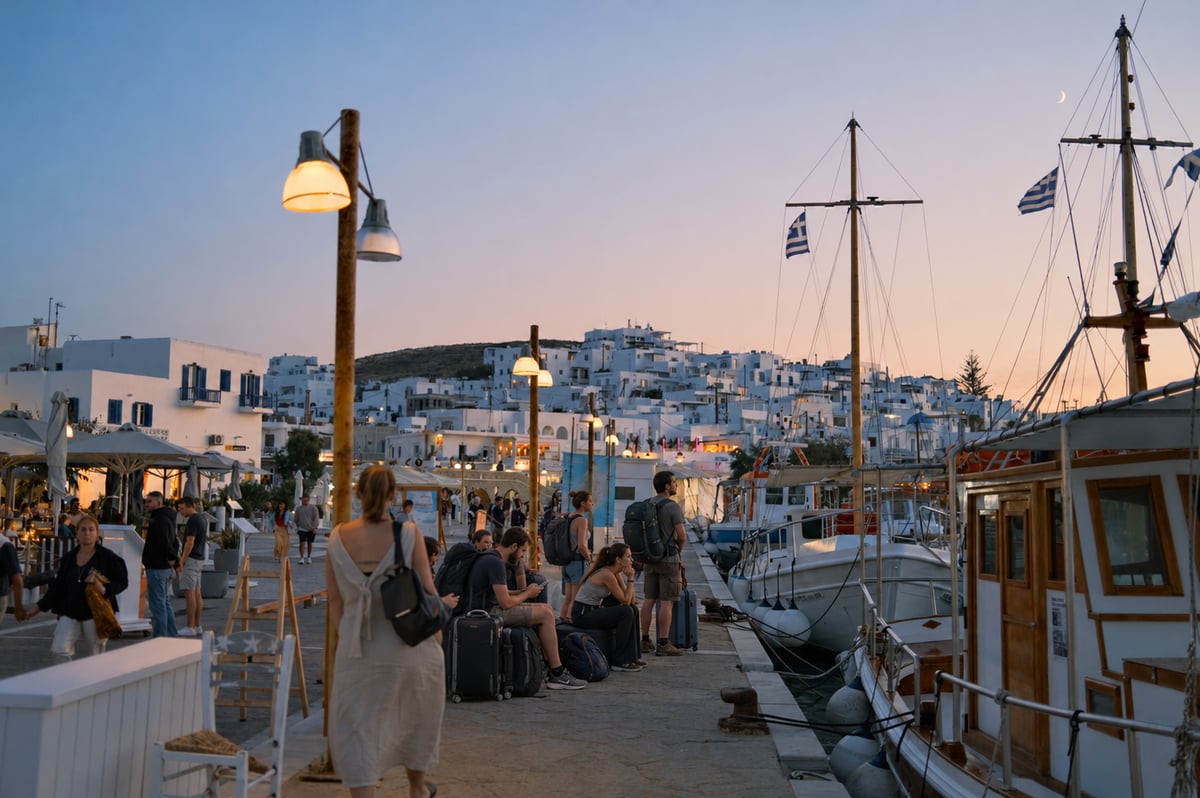
You wake up on Paros, the shutters are banging, and the harbor below is white. Your ferry to Athens is in a few hours and your flight home is tomorrow. Is the boat going, who decides, and what happens to your ticket if it does not? This guide answers those three questions directly, in the order you will need them on a windy island morning.
Who cancels a Greek ferry in high wind
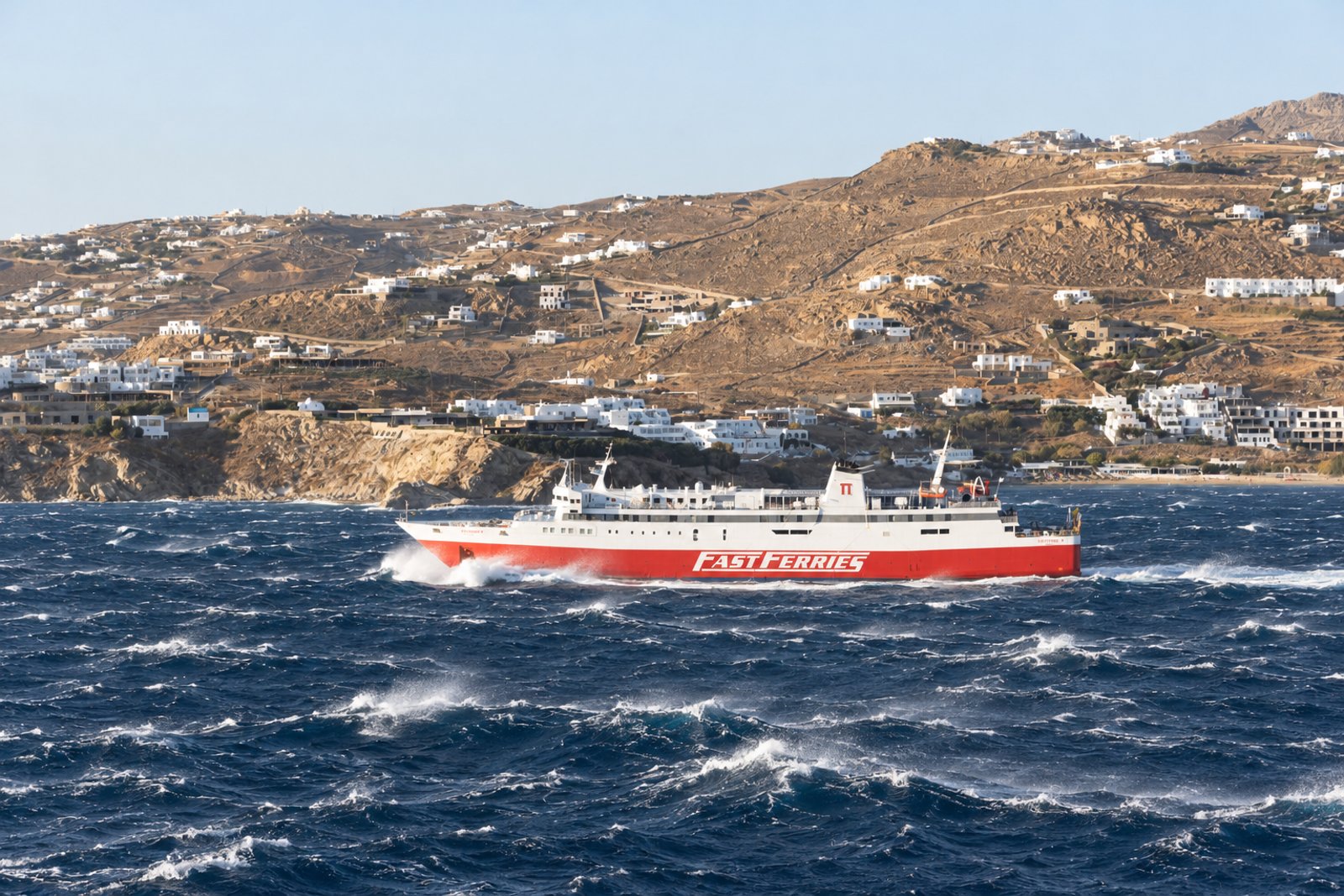
A Greek ferry cancelled by the wind is almost never the ferry company's choice. The Hellenic Coast Guard, through the local port authority, issues a sailing ban (apagorefsi apoplou) when the forecast wind force at sea passes the limit set for each type of vessel. Once the ban is announced for a port, every ship of that type stays tied up, whatever the operator would prefer.
That last point matters more than it sounds. The limits are set by vessel type, so a ban is rarely all-or-nothing. High-speed catamarans and small fast boats are stopped first, at winds a big conventional car ferry will still sail through. On a marginal day you will often see the slow ferry leave and the fast one stay, which is why travelers on the same route can get completely different news. The ban is also local: one port authority can keep ships in while the next island over is still sailing, and a ship can be held at the port where it is waiting even when your island looks calm.
The wind behind most summer bans is the meltemi, the dry north wind that blows across the Aegean in July and August. It tends to build over several days, peak in the afternoon and ease overnight, which is why early sailings are more likely to go than late ones. Outside summer the cause is usually a passing storm system, and those bans can arrive from any direction.
How much warning you get before a sailing ban
A Greek ferry sailing ban usually gives you less warning than you want: the Coast Guard decides on the forecast and on conditions at the port, often the evening before or on the morning of sailing, and can extend, lift or reimpose it during the day. Operators then text or email ticket holders, but the ban itself is the earlier and more reliable signal.
In practice you can read the signs well before the official notice. Watch the marine wind forecast for the sea area between you and your destination, not the forecast for your town; the open water is what counts. A run of strong-wind days in midsummer is a pattern, not a surprise. If you are booked on a fast boat during a meltemi spell, assume it is the one at risk.
On the day, three sources settle the question. The ferry company's own site and app show the status of each sailing. The port authority (limenarcheio) of your departure port can be phoned, and its staff will tell you whether a ban is in force. And the agency that sold your ticket on the island usually knows first, because it hears from the operator directly. Keep your phone reachable: the change-of-sailing message goes to the number and email on the booking, and it often lands while you are already on the way to the port. If you will be relying on mobile data to check, sort that out before you land.
One practical rule: go to the port anyway unless you have been told clearly that your sailing is cancelled. Bans are lifted with little notice, and a ship that sails after a short delay will not wait for passengers who stayed in their room.
What you are owed when the wind cancels your ferry
A ferry cancelled by a Greek sailing ban still leaves you with rights under EU Regulation 1177/2010 on sea passenger rights: the operator must offer you the choice between re-routing on a later sailing at no extra cost and a full refund of the ticket. What the weather removes is the extra cash compensation for the delay, and the duty to pay for your hotel.
Those two points are where most frustration comes from. The regulation treats weather that makes sailing unsafe as outside the operator's control, so you are not owed compensation on top of the ticket, and the carrier is not obliged to put you up for the night when the cause is weather. Some operators help anyway, especially on long routes, but count on paying for the extra night yourself. If you bought the ticket through a booking site, the refund or change runs through that site rather than the ferry company, so start there.
Re-routing is usually the better choice when the ban looks short, because the next sailing fills fast with everyone else from the cancelled boat. Ask at the agency or ticket office as soon as the ban is announced, not after the weather clears. A refund makes more sense when you can switch to a different route or to a flight. Travel insurance is what covers the extra hotel night and any missed connection that the regulation does not, provided the policy includes weather delays; check that before you need it.
Which Greek routes go first, and how to protect your flight home
Greek ferry routes do not all carry the same risk of a wind cancellation. Exposed open-sea crossings in the central and northern Cyclades during the meltemi are hit most often, fast boats more than slow ones, while sheltered Saronic Gulf routes close to Athens are disrupted least. The single protection that works on every route is a buffer: be back on the mainland the night before your international flight.
Practically, that means ending your island time a day earlier than it feels necessary, sleeping in Athens, and treating that night as insurance rather than lost holiday. A late afternoon ferry into Piraeus with an early morning flight is the classic plan that breaks. Our Piraeus port guide covers getting from the ferry to the city once you are back.
The other protection is a different mode for the last leg. Island airports are affected by strong wind too, but flights and ferries rarely fail for exactly the same reasons on the same day, so the bigger islands with Athens flights give you a fallback. Weighing when to fly instead of sail is laid out in domestic flights in Greece.
The bigger decision a wind ban exposes
A Greek ferry wind ban comes down to three facts: the Coast Guard calls it, the warning is short, and you are owed a new sailing or your money back but not the hotel. Once you have been through one ban, though, it becomes clear the cancellation was never the real problem. The real problem is how the island route was put together before you left home.
Which islands you string together, in what order, on which type of boat, and how many days sit between your last island and your flight home are not separate choices. A fast boat on an exposed crossing in August, booked as the final leg the day before a transatlantic flight, is three reasonable decisions that add up to one fragile trip. Change the order of the islands, or the type of boat on the exposed leg, and the same wind costs you an afternoon instead of a flight. Working those connections out, route by route and season by season, is what the complete greece trip guide does before you book anything.
FAQ
Can the ferry company cancel because of wind on its own?
The formal sailing ban comes from the Hellenic Coast Guard through the local port authority. Operators can also cancel or retime sailings, but on windy days the ban is what keeps ships in port.
Why did the big ferry sail when the fast boat was cancelled?
Wind limits are set by vessel type. High-speed craft are stopped at lower wind strengths than large conventional ferries, so on marginal days the slow boat often goes and the fast one does not.
Will the ferry company pay for my hotel if the wind cancels my sailing?
Usually not. EU Regulation 1177/2010 gives you re-routing or a refund, but weather that makes sailing unsafe removes the duty to provide accommodation and the extra compensation. Travel insurance with weather cover is what pays for the extra night.
Should I go to the port if a ban is expected?
Yes, unless you have been told clearly that your sailing is cancelled. Bans can be lifted at short notice, and a ship that sails after a delay will not wait for passengers who stayed away.
Keep planning
Not sure how the islands fit together?
Pick your trip length and we'll route a real island-by-island plan — ferries included.