Greek wine is one of the country's best-kept secrets — a 4,000-year-old winemaking tradition producing distinctive, food-friendly wines from native grapes you won't find anywhere else. For first-timers used to French or Italian labels, the Greek wine list can look unfamiliar, but that's exactly what makes it exciting. This guide is a beginner's introduction to Greek wine: the grapes and regions to know, what to order, and how to drink your way through Greece with confidence.
This article contains affiliate links. If you book through them we earn a small commission at no extra cost to you.
Why Greek wine is worth exploring
Greece has been making wine for millennia, and its real appeal is its indigenous grape varieties — hundreds of them, grown nowhere else, producing flavors you can't get from international wines. The wines are made to go with food, the quality has risen dramatically in recent decades, and they're often great value. Trying Greek wine isn't just a drink; it's part of experiencing the country.
The white grapes to know
Assyrtiko is the star — a crisp, mineral, high-acid white from volcanic Santorini, one of the world's great white wines and superb with seafood. Moschofilero from the Peloponnese is aromatic and floral; Malagousia is lush and peachy; and Savatiano is the grape behind retsina, the traditional pine-resin-flavored wine that's an acquired taste but worth trying once.
The red grapes to know
Agiorgitiko, from Nemea in the Peloponnese, is smooth, versatile, and approachable — an easy first Greek red. Xinomavro, from Naoussa in the north, is bold and complex, often compared to Italy's Nebbiolo (the grape of Barolo), and ages beautifully. Crete and other regions have their own native reds worth exploring too.
The wine regions
A few regions stand out for visitors. Santorini is the most famous for wine tourism — its wineries offer tastings with caldera views, and the volcanic Assyrtiko is unmissable. Nemea in the Peloponnese is the major red-wine region. Naoussa in the north is Xinomavro country. And Crete has a fast-improving scene with its own indigenous grapes. Each makes for a rewarding tasting if you're in the area.
What to order and how
Don't overthink it. House wine (chyma, served by the carafe) is cheap, local, and usually perfectly good for a casual meal. When you want to explore, ask the server for a local recommendation — Greeks are proud of their regional wines and happy to point you to something. Match it to your food: Assyrtiko or another crisp white with seafood and mezedes, Agiorgitiko with grilled meats. By the glass is a great way to sample as you go.
Beyond wine: the spirits
Greece's traditional spirits are part of the drinking culture too. Ouzo, the anise-flavored spirit, turns cloudy when you add water and ice and pairs classically with seafood mezedes. Crete's raki (or tsikoudia) is a clear, strong grape spirit often offered free at the end of a meal. Tsipouro is a similar mainland spirit. A small glass is a lovely way to end a Greek dinner.
Visiting a winery
A winery visit is one of the most pleasant things to do in wine regions like Santorini, Nemea, or Crete — tastings, often with views, and a chance to learn about the native grapes from the people who grow them. Many are easy to reach by car or on an organized tour (handy, since you'll be tasting). Book ahead in peak season, especially the popular Santorini wineries. Because tasting and tour prices vary, check current options rather than assuming a fixed cost.
Drink Greek
The best advice for Greek wine is simply to be curious. Skip the familiar international labels and order the local grapes — the Assyrtiko, the Agiorgitiko, the regional house wine. You'll drink better, spend less, and taste something genuinely unique to Greece. It's one of the most rewarding and underrated parts of a Greek trip.
Greek wine and food pairing made simple
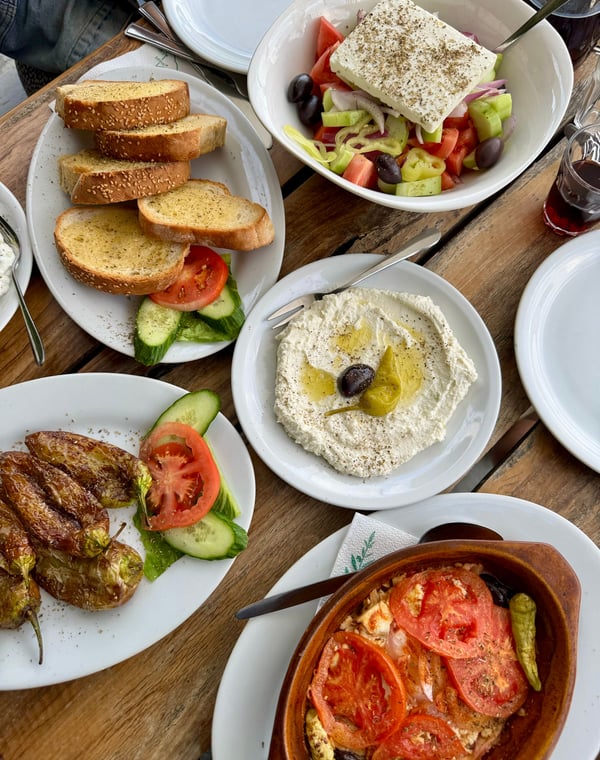
You don't need to be an expert to pair Greek wine well — the wines evolved alongside the food, so the matches are intuitive. Crisp whites like Assyrtiko are made for the sea: order them with grilled fish, seafood, and briny mezedes like taramasalata. Aromatic whites like Moschofilero suit lighter dishes, salads, and vegetable plates. For reds, smooth Agiorgitiko handles grilled meats, souvlaki, and tomato-based baked dishes like moussaka, while bold Xinomavro stands up to slow-cooked lamb and rich stews. Retsina, the resinated white, is a surprisingly good foil for oily or fried mezedes. And when in doubt, the house wine is chosen by the taverna to go with their own food, so it's rarely a wrong call. The simplest rule: drink the wine of the region you're in with the food of the region you're in, and it'll almost always work.
FAQ
Is Greek wine good?
Yes — Greece has a 4,000-year winemaking tradition and hundreds of unique native grapes, and quality has risen sharply in recent decades. The wines are food-friendly, distinctive, and often excellent value.
What Greek wine should I try?
Assyrtiko, the crisp volcanic white from Santorini, is the star. For reds, try smooth Agiorgitiko from Nemea or bold Xinomavro from Naoussa. House wine by the carafe is a great cheap everyday choice.
What is retsina?
A traditional Greek white flavored with pine resin, made mainly from the Savatiano grape. It's an acquired taste but worth trying once for its unique, historic character.
What's the difference between ouzo and raki?
Ouzo is an anise-flavored spirit that turns cloudy with water, classic with seafood mezedes. Cretan raki (tsikoudia) is a clear, strong grape spirit with no anise, often served free at the end of a meal.
Where can I do wine tasting in Greece?
Santorini is the most famous for wine tourism, with tastings and caldera views. Nemea in the Peloponnese, Naoussa in the north, and Crete are also rewarding. Book popular wineries ahead, and consider a tour since you'll be tasting.
Keep planning
Not sure how the islands fit together?
Pick your trip length and we'll route a real island-by-island plan — ferries included.