If this is your first trip to Greece, ten days is the sweet spot: long enough to see Athens properly, settle into two very different islands, and still feel like you took a vacation instead of a forced march. This itinerary pairs the capital with the relaxed, authentic side of the Cyclades and the showstopping caldera of Santorini — Athens first, then Naxos to slow down, then Santorini for the grand finale. You fly back to Athens from Santorini for your flight home, so you never retrace a long ferry leg.
It's built for the way Americans actually travel to Greece: a long flight in, a need for the highlights without the overwhelm, and prices that make sense in dollars. Shoulder season (May, June, September, early October) is the ideal window — warm, swimmable, and far less crowded than the July–August crush.
Days 1–3: Athens
Most nonstop flights from the U.S. land at Athens International Airport (ATH) in the morning after an overnight crossing of roughly nine to eleven hours. Take the Metro (Line 3) straight into the center in about 40 minutes for a few euros, or a taxi on the fixed daytime tariff. Base yourself in Plaka — the old-town lanes under the Acropolis are walkable, charming, and put you minutes from everything a first-timer wants to see.
Day 1: Ease in
Don't over-schedule your jet-lagged arrival day. Wander Plaka, climb up to the tiny island-like neighborhood of Anafiotika, and have your first long taverna dinner — Greeks eat late, around 9pm, and nobody rushes you. Round up the bill 5–10% and you've tipped well; there's no American-style 18–20% expectation here.
Day 2: The Acropolis and the Agora
Go to the Acropolis right at opening or in the late afternoon to dodge both the heat and the cruise-ship crowds. Pair the hilltop with the Acropolis Museum, which displays the marbles in context, and the Ancient Agora below, where the well-preserved Temple of Hephaestus still stands. Cap the day with sunset drinks at a rooftop bar facing the floodlit Acropolis.
Spend the morning at the National Archaeological Museum — the finest collection of Greek antiquities anywhere — then take an afternoon trip down to Cape Sounion to watch the sun set behind the cliff-top Temple of Poseidon. It's the perfect bookend before you head for the islands.
Days 4–6: Naxos
From Athens' port of Piraeus, take a ferry into the Cyclades. Naxos is the island most first-timers skip and most repeat visitors love — big sandy beaches, real working villages, and noticeably lower prices than its flashier neighbors. It's the "stay longer, pay less" choice, and it's the antidote to anyone worried Greece is all crowds and selfie sticks.
What to do
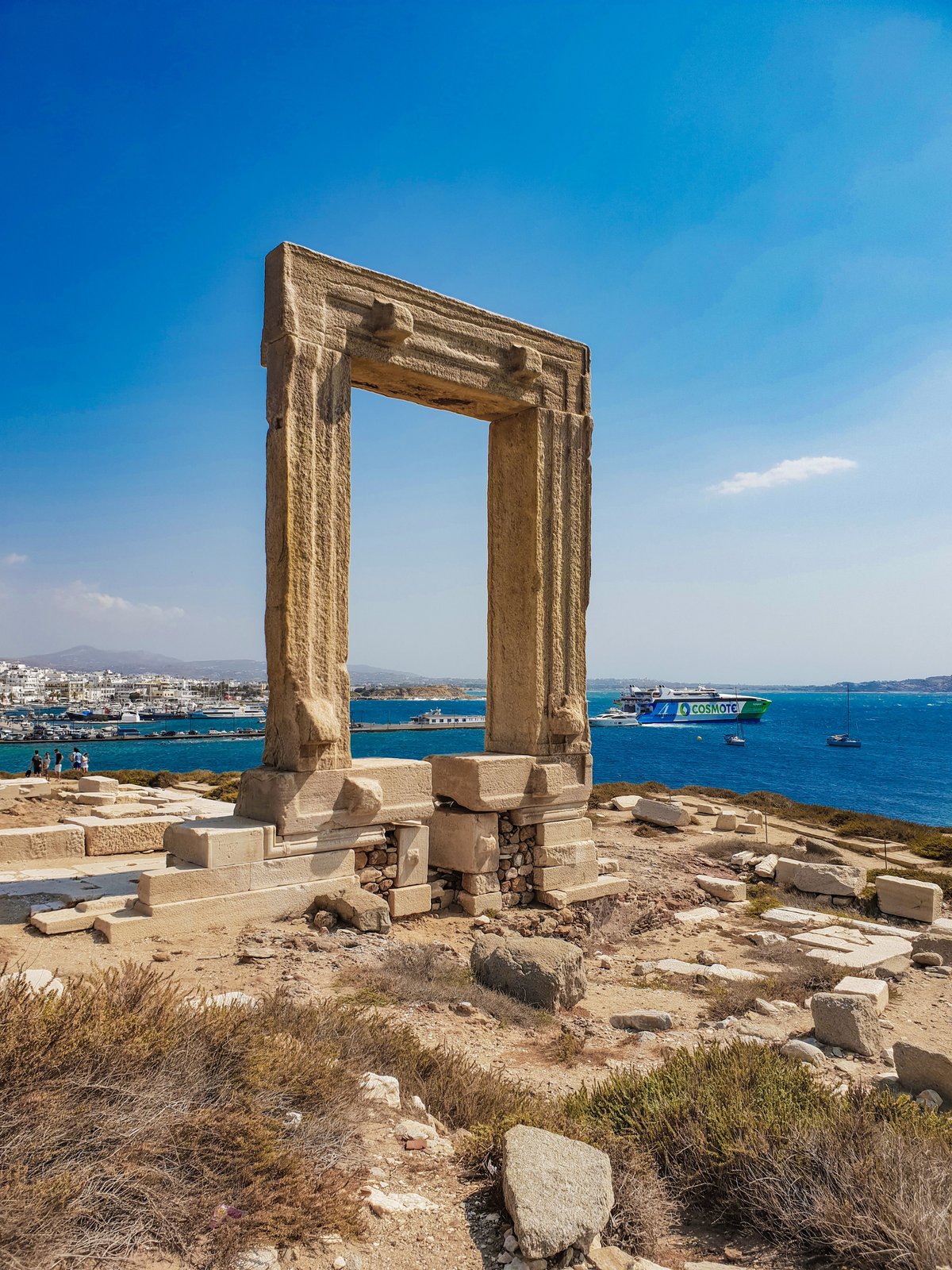
Walk out to the Portara, the giant marble temple doorway on the islet by the harbor — it's spectacular at sunset. Get lost in the Venetian Kastro in the old town, spend a slow afternoon on Plaka or Agios Prokopios beach (long, sandy, and shallow enough for families), and rent a car for a day to reach the mountain villages of Halki and Apiranthos. Naxos is an agricultural island, so eat what it grows: local graviera cheese, potatoes, and citrusy Kitron liqueur.
Days 7–9: Santorini
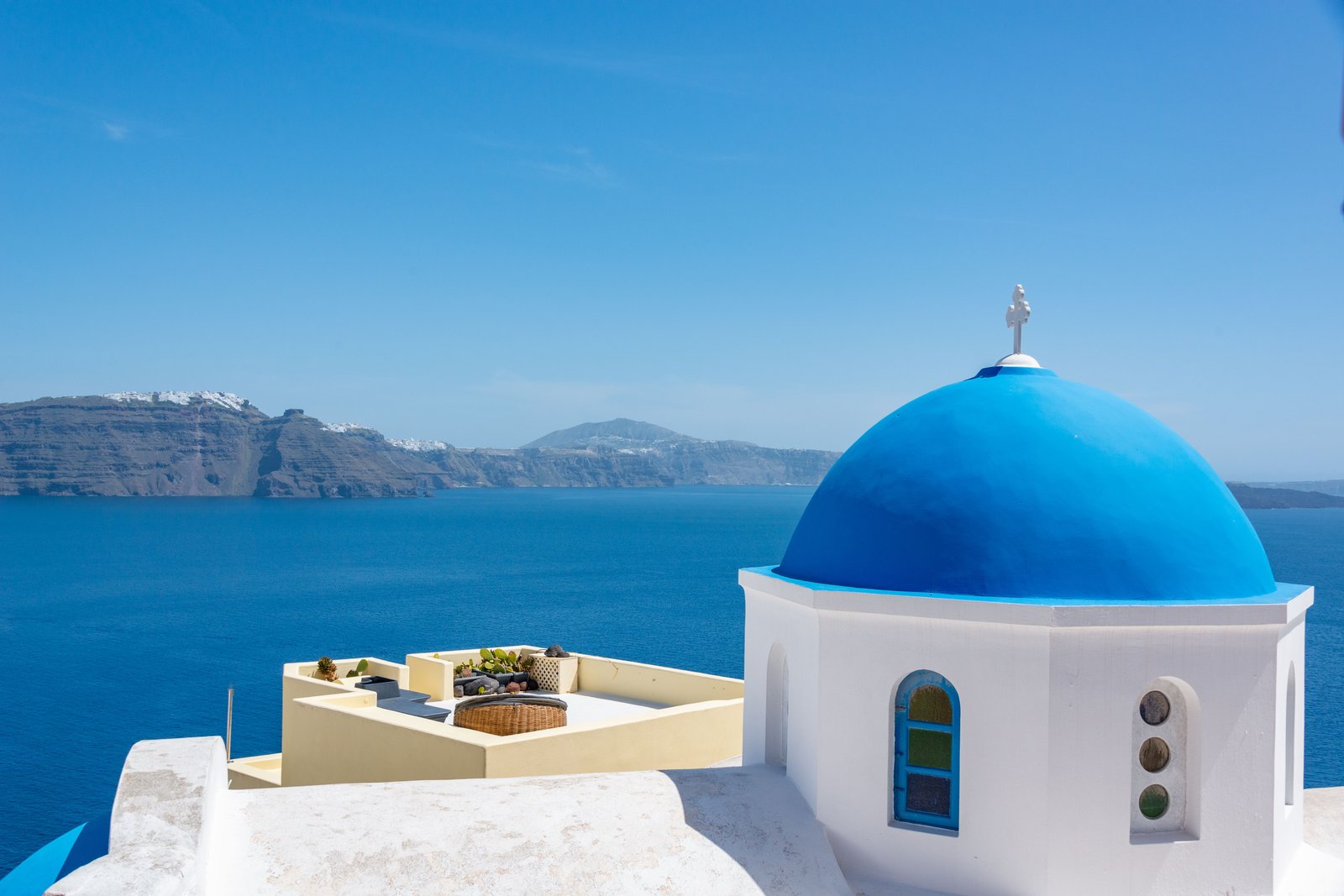
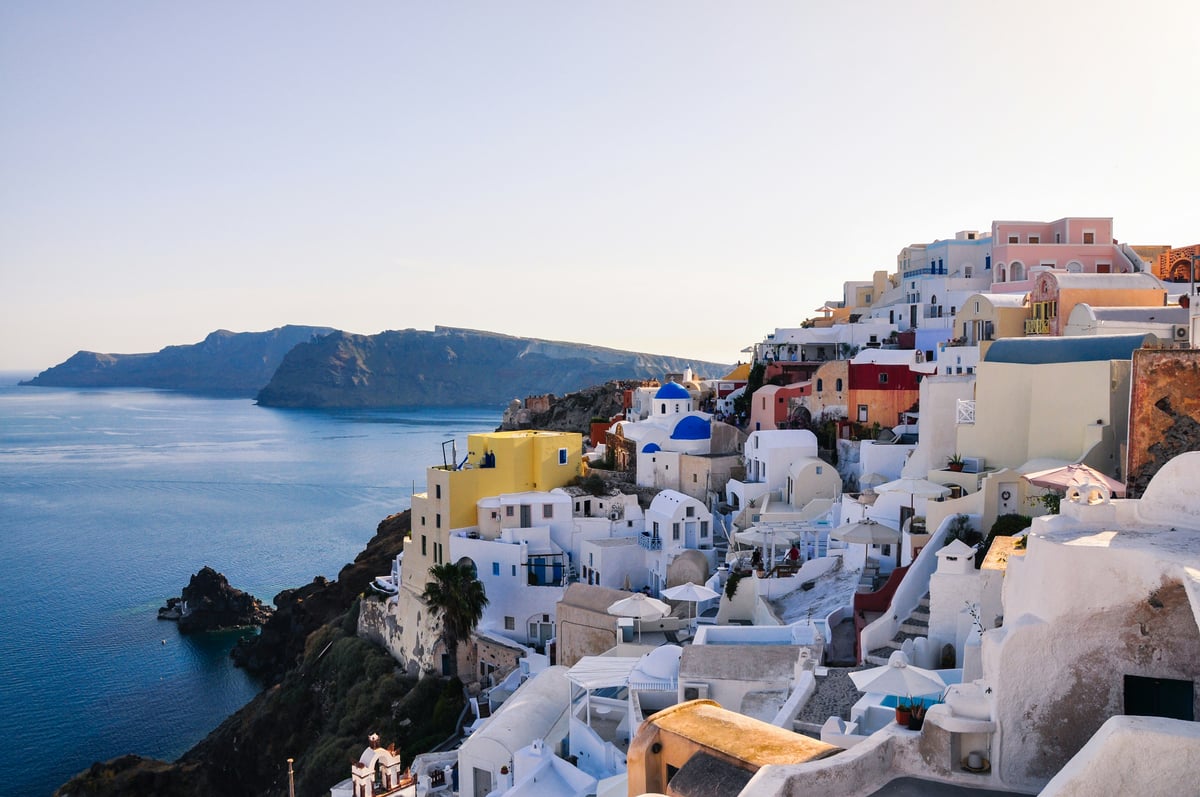
A ferry south brings you to Santorini — the island on the postcard, and the right place to end on a high. Stay up on the caldera in Oia or quieter Imerovigli for those blue-domed, cliff-edge views, or in Fira for more value and easier transport. Book a transfer in advance; it's a steep climb up from the port.
Yes, watch the famous Oia sunset — but arrive early or find a quieter caldera-edge spot, because the crowds are real. Then go deeper: walk the stunning clifftop trail from Fira to Oia, tour the remarkably preserved Bronze Age site at Akrotiri, and taste the island's volcanic-soil Assyrtiko wines. For dinner with fewer crowds and better value, head inland to the tavernas of Pyrgos or Megalochori.
Day 10: Fly home
Here's the move that makes this whole loop work: instead of ferrying all the way back to Athens, take the quick (~45-minute) flight from Santorini (JTR) to Athens to connect with your flight home. No backtracking, no lost day on a boat. Domestic flights book up fast in season, so reserve this leg early.
Shorter or longer trip? How to adapt this plan
Ten days is the sweet spot for a first trip, but the same logic works from five days to two weeks. The rule that holds at every length: each island change costs most of a day in packing, ports and transfers, so fewer stops make a better trip. There are no direct U.S. flights to the islands, so every version starts and ends in Athens.
Five days: one city, one island
Do not island-hop. Spend two nights in Athens (the Acropolis and its museum, the Ancient Agora, the old-town lanes) and two or three on one island. Santorini is the classic pairing, reached by a 45-minute flight; for a calmer, better-value stay, swap in Naxos or Paros. If you have seen Athens before, give one island all five days: Naxos or Crete are big enough to fill them without moving hotels.
One week: Athens and one or two islands
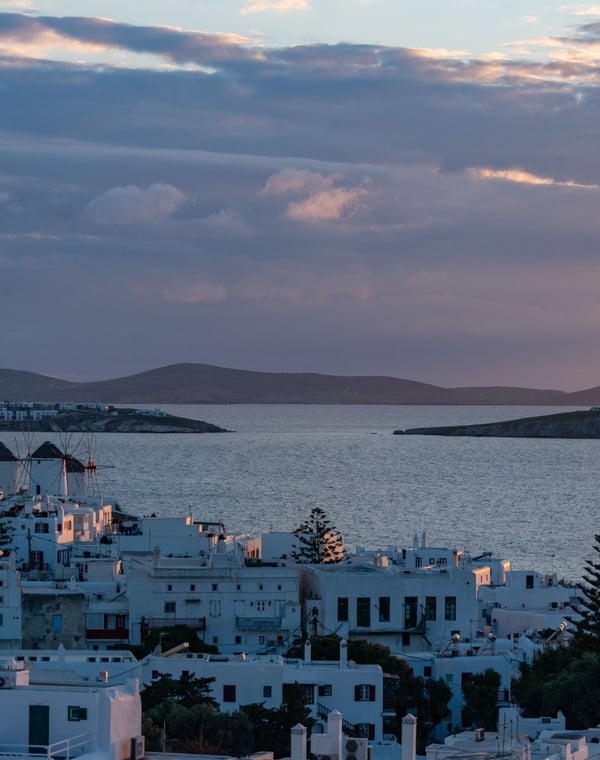
The lowest-stress week is Athens (three nights) and Santorini (three nights): one move, one short flight, then fly back to Athens on the last day. If you want variety, do Athens (two nights), an easy middle island (two nights) and Santorini (three nights). Paros suits a relaxed, better-value stay; Mykonos suits nightlife and a Delos day trip. Two islands is the most a week holds; a third, or Crete, is where it starts to feel rushed.
Two weeks: three islands, or two and Crete
Fourteen days fits Athens plus three Cycladic islands at an easy pace, moving between neighbors so the ferry legs stay short, or two islands and Crete, reached by a flight. Finish either on Santorini's caldera or on Crete for Knossos, Chania and the mountains (a rental car helps there). For history, add a day from Athens to Delphi or to Mycenae and Epidaurus (see day trips from Athens). For the slowest version, keep to Athens and two islands with four or five nights each.
What this trip costs
Excluding your transatlantic flight, a comfortable mid-range version of this trip — 3–4★ hotels, a mix of ferries and one domestic flight, sit-down taverna dinners, and a few tours — runs roughly in the mid-range daily band per person. Budget travelers using guesthouses, deck-class ferries, and casual gyro spots can do it for considerably less; luxury travelers in cave suites with private transfers will spend well above it. Because real prices shift with season and demand, check current ferry and hotel rates as you book rather than trusting a fixed number.
Smart swaps
This itinerary flexes easily. Prefer nightlife and beach clubs over quiet villages? Swap Naxos for Mykonos. Want one island instead of two? Give Naxos four nights and Santorini four. Traveling with kids? Naxos's shallow beaches make it the better family base, so weight your nights there.
FAQ
Is 10 days enough for Greece?
For a first trip focused on Athens and the Cyclades, yes — 10 days lets you see Athens, plus two islands, without rushing. Trying to add Crete or the mainland in the same trip is where 10 days starts to feel tight.
Should I rent a car for this itinerary?
Only on Naxos, for a day, to reach the inland villages and quieter beaches. You don't need one in Athens (great Metro) or on Santorini (transfers and buses are easier than parking in Oia and Fira).
Is it better to ferry or fly between the islands?
Ferries are part of the experience and connect everything in the Cyclades. For the final leg back to your international flight, the short Santorini–Athens flight saves a long boat day — that's the one leg worth flying.
When is the best time to do this trip?
May, June, September, and early October. The weather is warm and swimmable, ferries run frequently, and you avoid the peak July–August heat, crowds, and prices.
Do I need to book ferries in advance?
In shoulder season you usually have flexibility, but popular high-speed routes and the summer peak sell out — book those ahead. Always check the current schedule, as sailings change seasonally and the meltemi wind can disrupt summer crossings.